
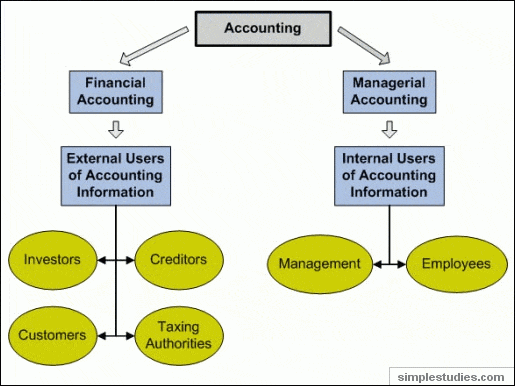
Accounting is the art of analyzing and interpreting data. It may not be apparent to some but every business and every individual uses accounting in some form. An individual may knowingly or unknowingly use accounting when he evaluates his financial information and relays the results to others. Accounting is an indispensable tool in any business, may it be small or multi-national.
The term "accounting" covers many different types of accounting on the basis of the group or groups served. The following are the types of accounting.
1. Private or Industrial Accounting: This type of accounting refers to accounting activity that is limited only to a single firm. A private accountant provides his skills and services to a single employer and receives salary on an employer-employee basis. The term private is applied to the accountant and the accounting service he renders. The term is used when an employer-employee type of relationship exists even though the employer is some case is a public corporation.
2. Public Accounting: Public accounting refers to the accounting service offered by a public accountant to the general public. When a practitioner-client relationship exists, the accountant is referred to as a public accountant. Public accounting is considered to be more professional than private accounting. Both certified and non certified public accountants can provide public accounting services. Certified accountants can be single practitioners or by partnership ranging in size from two to hundreds of members. The scope of these accounting firms can include local, national and international clientele.
3. Governmental Accounting: Governmental accounting refers to accounting for a branch or unit of government at any level, may it be federal, state, or local. Governmental accounting is very similar to conventional accounting methods. Both the governmental and conventional accounting methods use the double-entry system of accounting and journals and ledgers. The object of government accounting units is to give service rather than make profits. Since profit motive cannot be used as a measure of efficiency in government units, other control measures must be developed. To enhance control, special funds accounting is used. Governmental units can use the services of both private and public accountant just as any business entity.
4. Fiduciary Accounting: Fiduciary accounting lies in the notion of trust. This type of accounting is done by a trustee, administrator, executor, or anyone in a position of trust. His work is to keep the records and prepares the reports. This may be authorized by or under the jurisdiction of a court of law. The fiduciary accountant should seek out and control all property subject to the estate or trust. The concept of proprietorship that is common in the usual types of accounting is non-existent or greatly modified in fiduciary accounting.
5. National Income Accounting: National income accounting uses the economic or social concept in establishing accounting rather than the usual business entity concept. The national income accounting is responsible in providing the public an estimate of the nation's annual purchasing power. The GNP or the gross national product is a related term, which refers to the total market value of all the goods and services produced by a country within a given period of time, usually a calendar year.


